Interactive Design definition
Interactive Design involves a product (website, app etc) that allows for interaction between the product and the user. The goal of interactive design is to create an experience within the product that will allow for the user to achieve their goal in the easiest and best way possible. Interactions between the user and the product can involve certain attributes such as, motions, sounds and aesthetics.
The use of interaction creates a more engaging and user-friendly experience for the user and can often lead to a more enjoyable experience for the user.
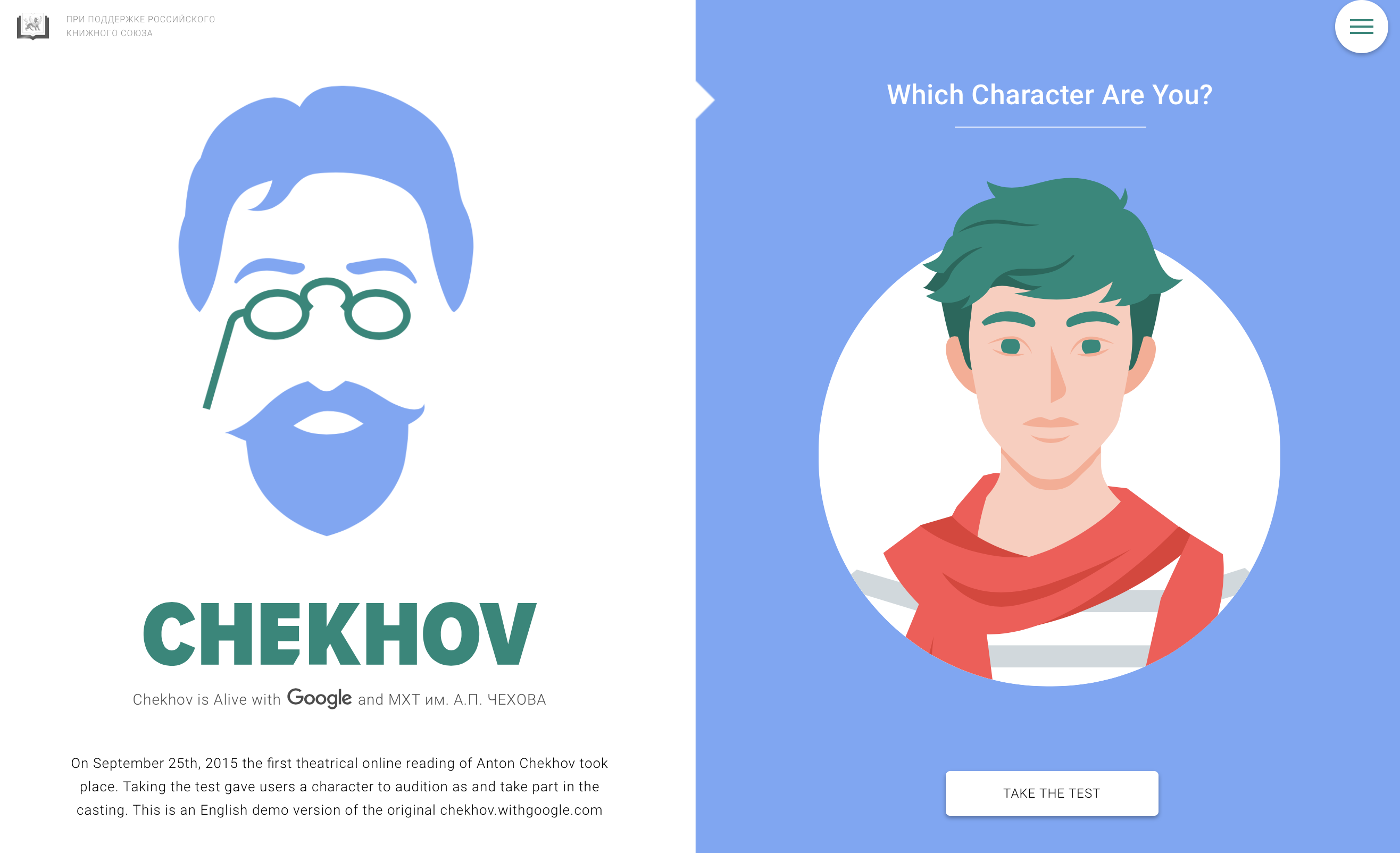
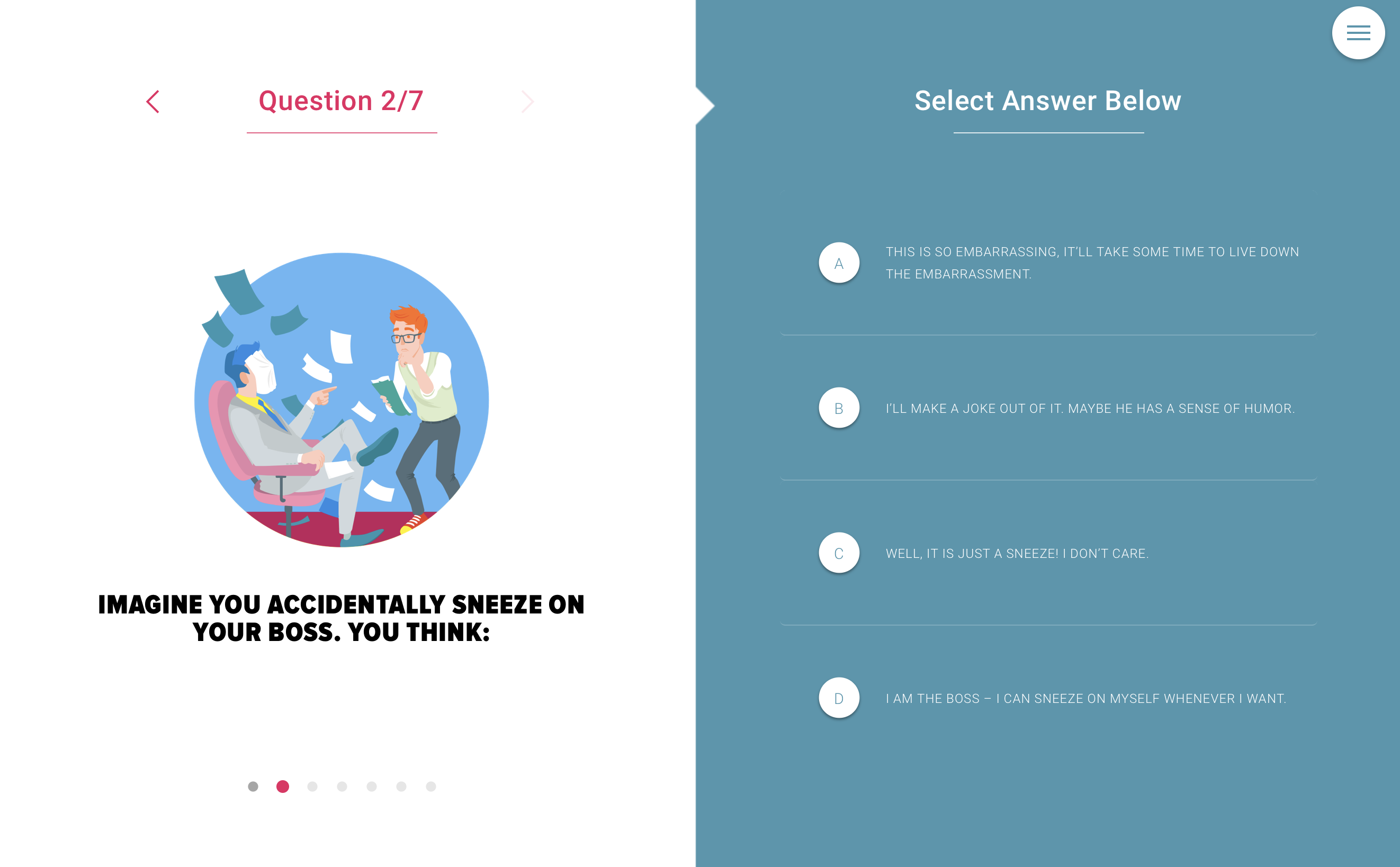
Chekhov
This website includes fun illustrative graphics and the interactive questionnaire to grab the attention of the user. This bright and engaging colour palette along with the easy functionality encourages the user to interact with the website.
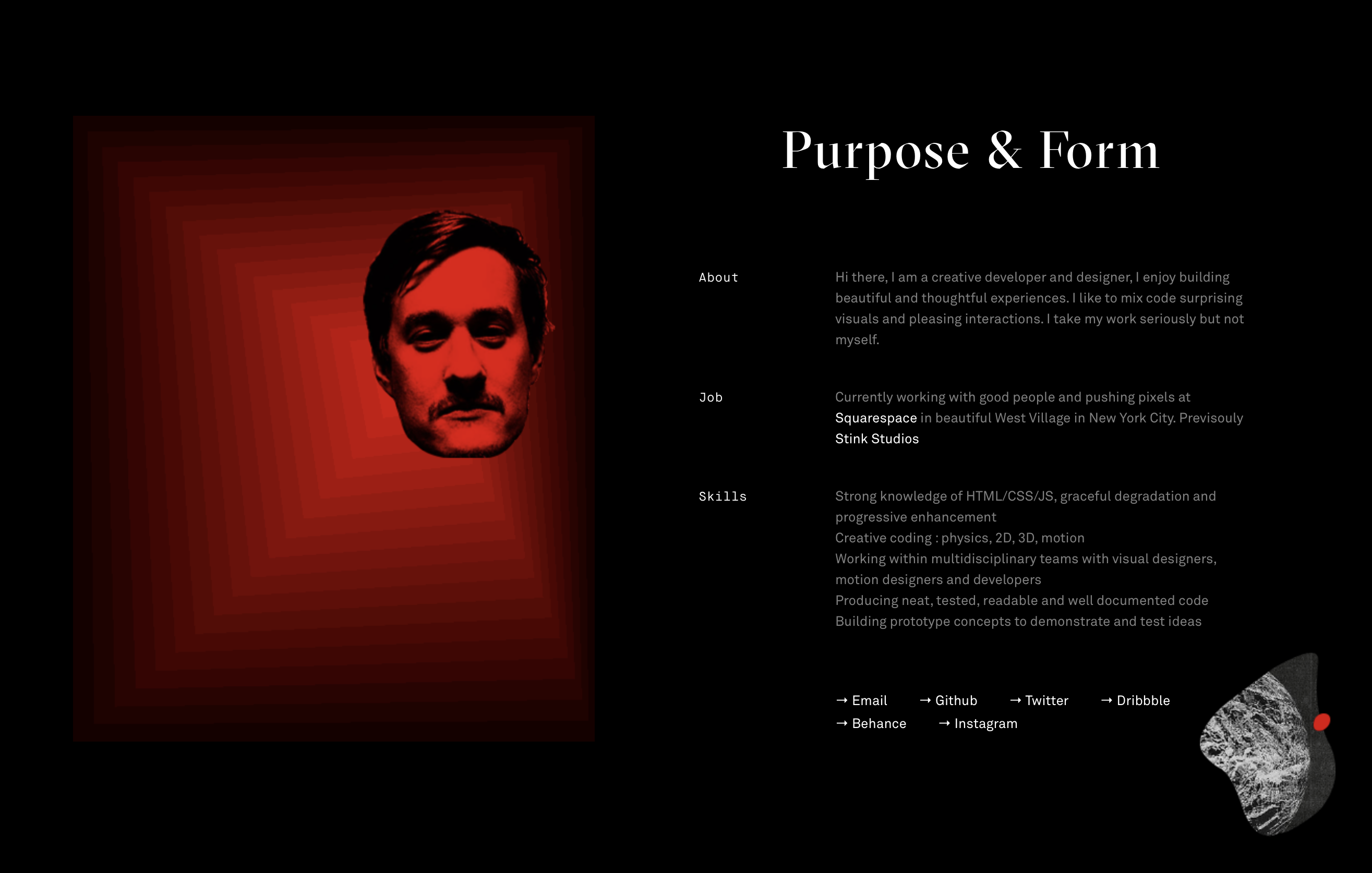
Timothèe Roussilhe Portfolio
This website allows the user to scroll down through the website and view the portfolio. At the end, there is a face that follows the users cursor which I thought was a nice touch and added a quirky level of interactivity that I didn’t see many websites having.
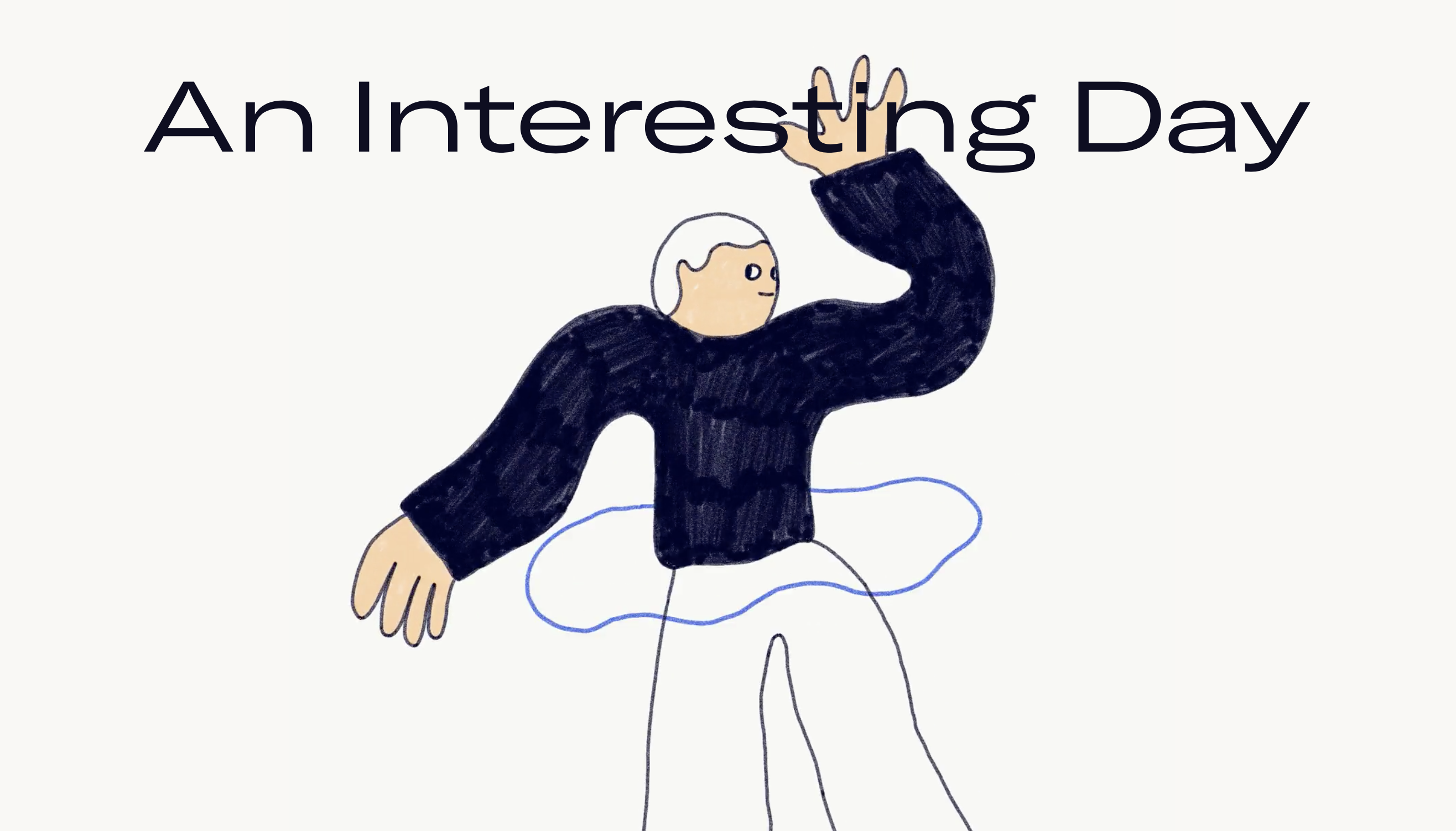
An Interesting Day
This website combines fun colours and illustration along with imagery to create a minimalist but complex website. It allows for the user to slide through and find conferences and contact information. It is very easy to use and enjoyable to look at.
Information and Instructional Design Definition
Information design takes data and information and turns it into an aesthetic visual representation that is easier for the user to understand the information it is conveying. It is an engaging way to show facts and statistics and has completely changed how information can be shared.
Instructional design pairs imagery with instructions to create an easier to understand experience. The process involves assessing the user’s needs, planning a process and developing the content to test its effectiveness. Like information design it also uses aesthetics to help convey a message. Imagery and information leads to stronger and easier to understand instructions and can also help get past language barriers.
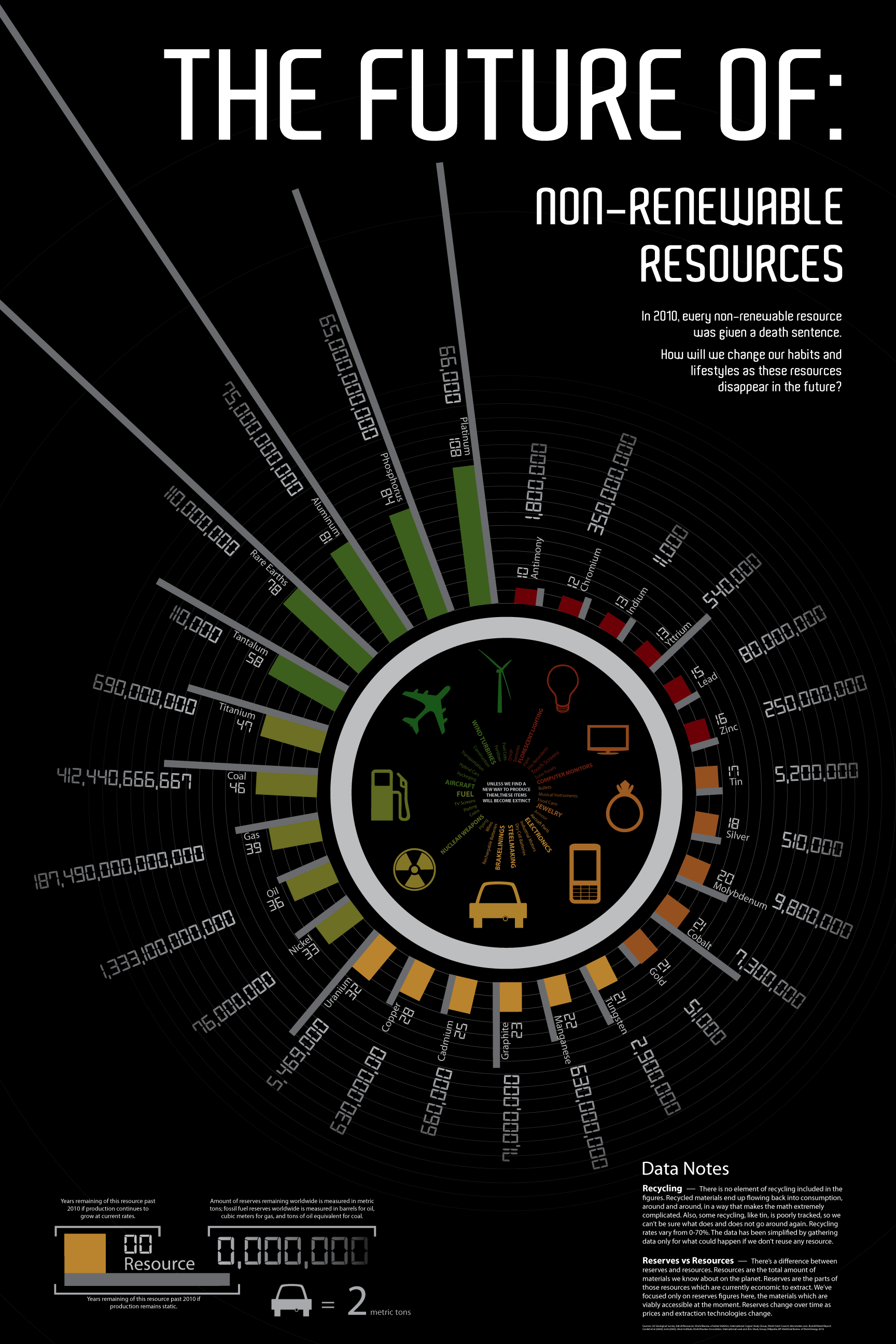
Non-renewable Resources
This poster is an example of information design. This design shows how many years left before earth will run out of non-renewable resources.
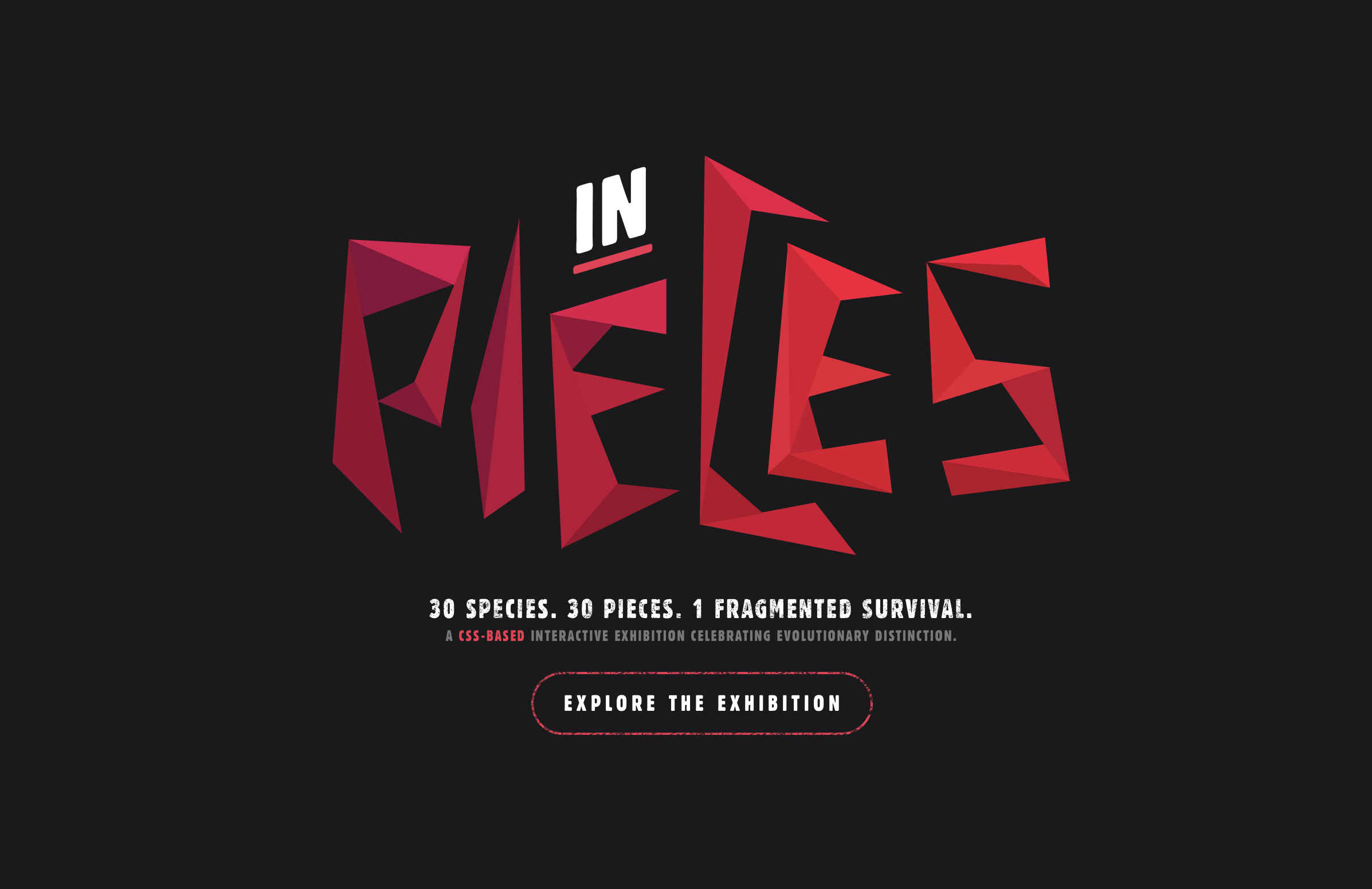
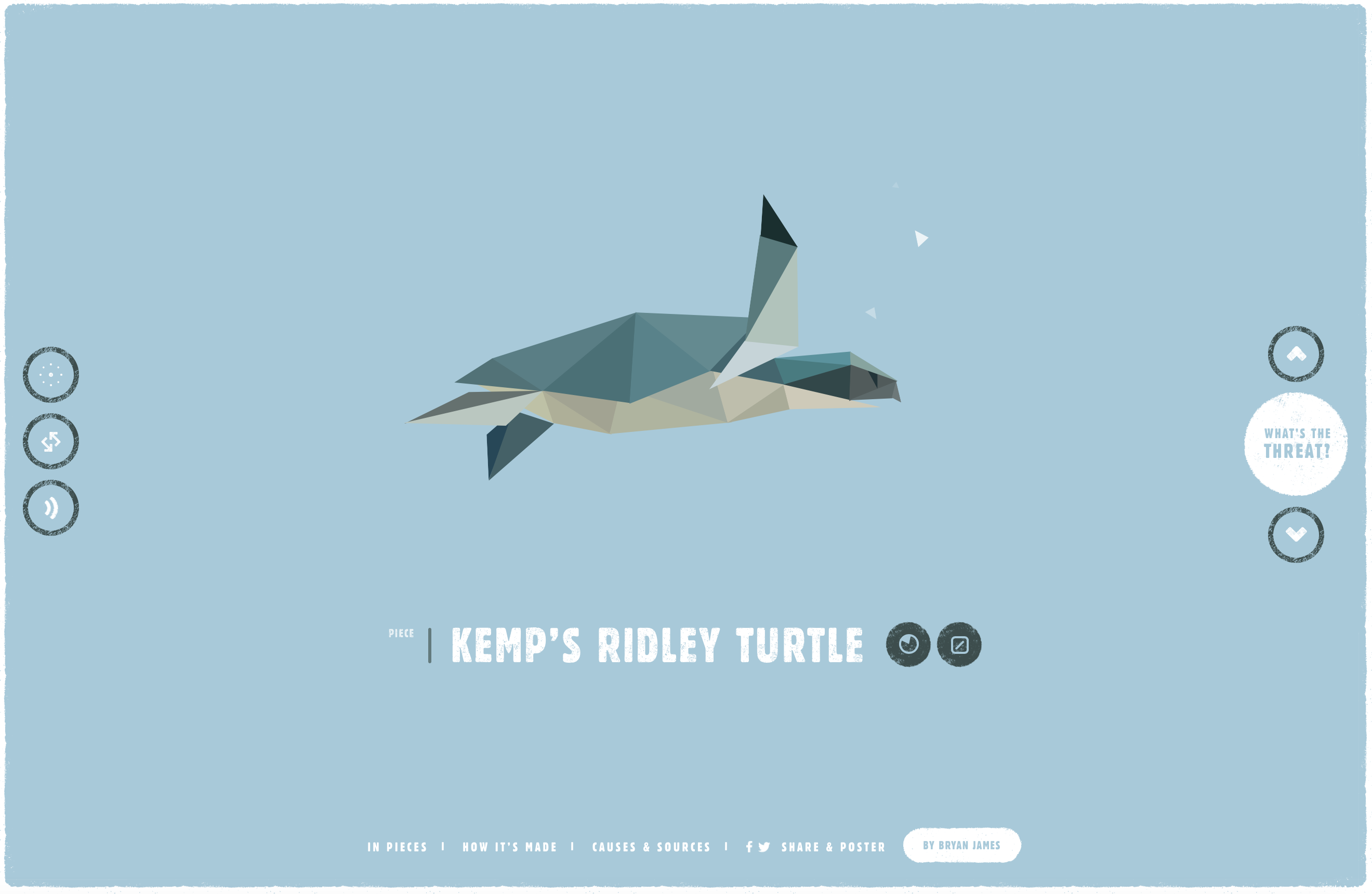
In Pieces
This website is another good example of how information design is used to create a user-friendly experience that clearly conveys information in a fun and engaging way. By scrolling through the website, the animals break apart as you move on to new ones. It is very easy to understand and use and combines a very strong aesthetic, along with interesting information
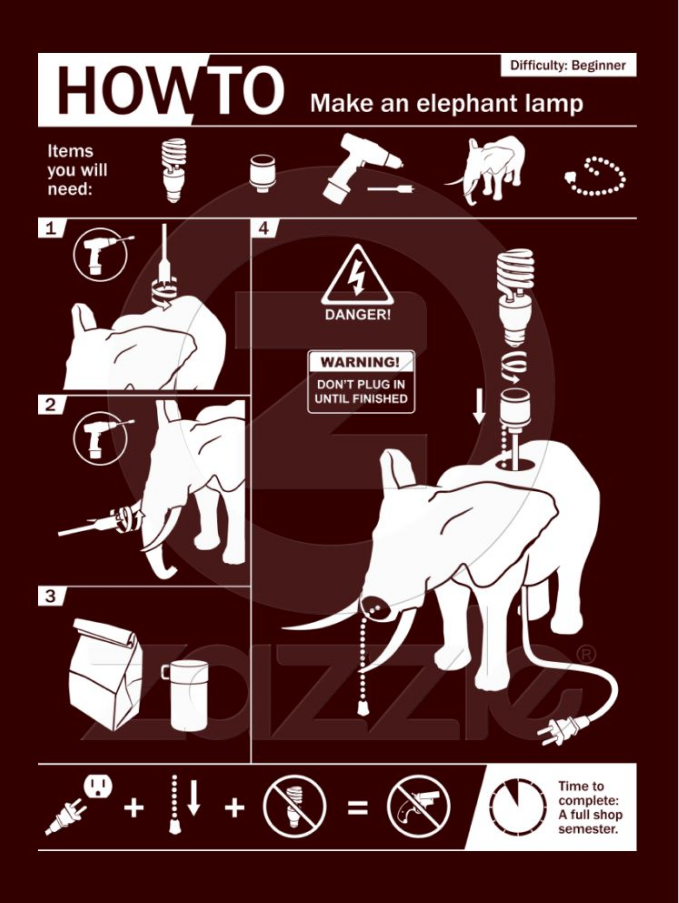
How to make an elephant lamp
This poster shows a classic way that instructional design can be formatted and used. I find that some more written instructions could be included to strengthen this design but it is a good example of how design can be instructional.
 JDF Information Design & Notes